About Daniel
I am a Clinical Mental Health Counselor, psychoanalytically positioned to understand symptoms as adaptive survival functions. If you have felt consistently misunderstood by the systems intended to support you, or if your experience has felt too complex for standard care, you've found the right place.

Philosophy of Practice
Treatment follows a deliberate sequence — not because of preference, but because sequence determines safety.
- 1Relationship first. Nothing else works without it. The therapeutic alliance is not a means to treatment — it is treatment, especially in the early phase.
- 2Contain before interpreting. For clients carrying psychosis, severe trauma, or dissociative experience, premature meaning-making can destabilize. The therapist's first job is to function as a containing presence — a mind that can hold what the client cannot yet hold alone.
- 3Build language. Once containment is established, we work toward symbolization: helping the psyche develop the capacity to think about its own experience rather than act it out or evacuate it.
- 4Integrate. Depth work — exploring the meaning and function of symptoms, relational patterns, and inner structure — proceeds only when the foundation is stable enough to support it.
This framework draws on psychodynamic and psychoanalytic theory (Bion, object relations, existential-phenomenological approaches), integrated with evidence-based tools where appropriate: CBTp for psychosis, DBT for emotional regulation, CBTi for sleep, LBT for meaning-reconstruction. Behavioral methods are used in service of depth — not as a substitute for it.
Additional commitments:
- Bidirectional reality-testing — the clinician's perspective is held accountable, not just the client's
- Faith-informed and spirituality-integrated care, without reducing spiritual experience to symptom
- Regression in treatment is understood as the plan working, not breaking down
How to Use Me
Mad River is a specialized high-acuity practice. The conditions below represent areas of focused clinical training, structured treatment approaches, and ongoing supervision — not a general menu.
Psychosis-Spectrum Conditions
Schizophrenia, schizoaffective disorder, bipolar psychosis, brief psychotic disorder, and psychosis co-occurring with trauma or neurodevelopmental conditions. Treatment follows a structured phase-oriented model with phase-specific interventions and benchmarks. Explore Psychosis Care →
Trauma, Complex Trauma & Moral Injury
PTSD, Complex PTSD, extended exposure trauma (veterans, first responders), moral injury, and complex grief. Includes presentations where trauma has contributed to psychotic or dissociative symptoms. View Trauma Treatment Model →
Dissociative Disorders
DID, OSDD, dissociative amnesia, depersonalization/derealization, and dissociative presentations alongside complex trauma or psychosis. Treatment follows a phase-oriented model respecting the system's pace and goals. Learn About DID Treatment →
Personality-Spectrum & Identity
Borderline, narcissistic, antisocial, and other personality-spectrum presentations. Identity disruption, existential crisis, spiritual emergency, and motivation disorders.
Mood & Bipolar Disorders
Bipolar I and II, cyclothymia, and mood disorders with psychotic features or complex comorbidity.
Depression & Anxiety
Including cases where standard approaches have not produced lasting change.
High-Stress Roles
Veterans, active-duty military, first responders, and medical professionals navigating occupational trauma, institutional mistrust, identity transition after service, or moral injury.
What to Expect
Non-Judgmental Space
Space for non-judgmental discussion
Finding Words
Assistance articulating the unexplainable
Awareness & Pacing
Practice with Awareness and Pacing
Your Autonomy
Respect for client autonomy, agency, and freedom
The Person Behind the Practice


Education & Credentials
- Northwest University
- MA in Clinical Mental Health Counseling
- University of Arizona Global Campus
- BA in Homeland Security and Emergency Management
- Community College of the Air Force
- AS in Information Systems Technology
Clinical Supervision
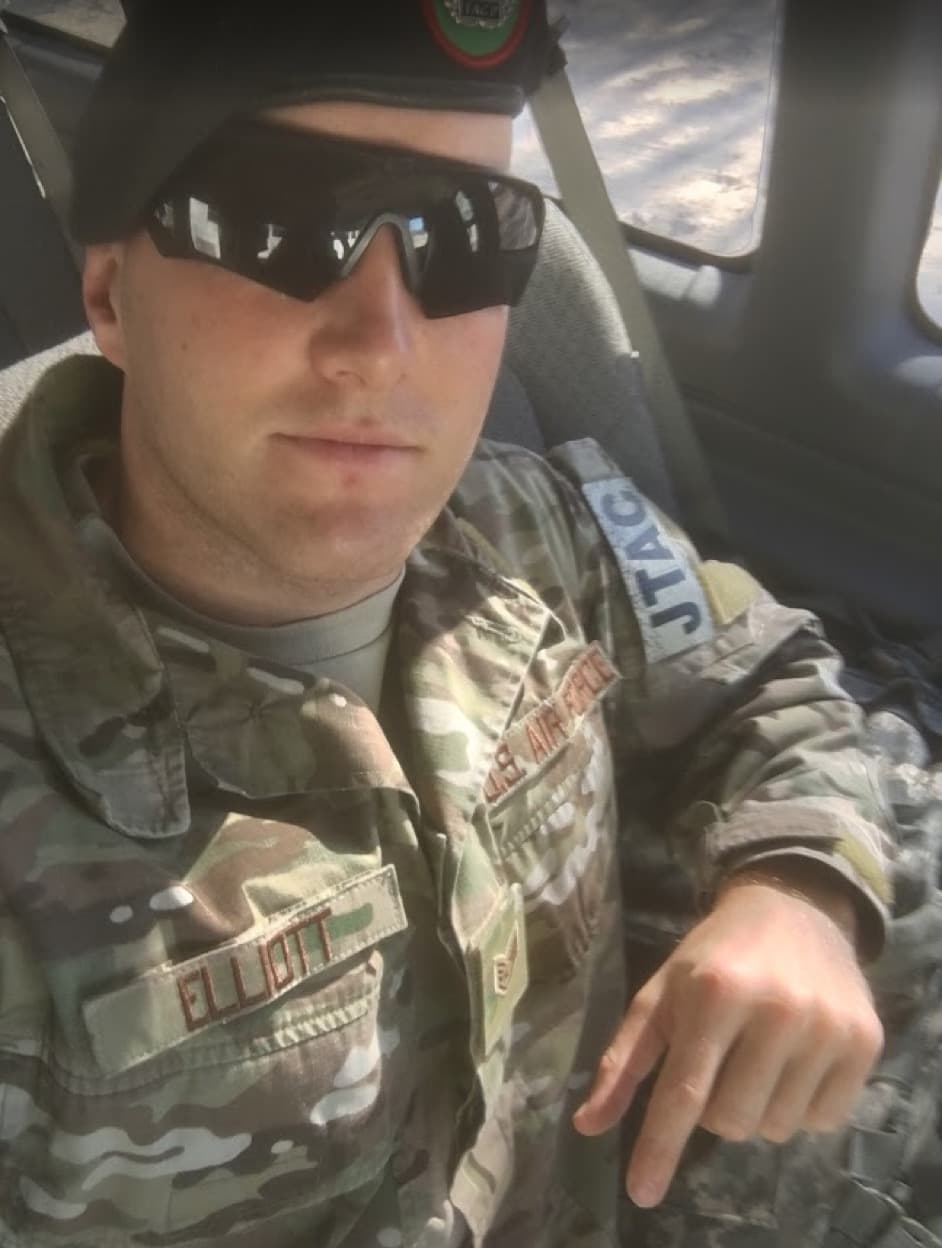
Daniel Elliott (License #61673311) operates Mad River, PLLC under the clinical supervision of Dr. Brent Potter, PhD, LMHC (License #LH00007704). Dr. Potter is an established author and clinician specializing in existential-phenomenological approaches to complex mental health. This collaboration ensures advanced clinical oversight for high-acuity presentations.
Background & Experience
Military & Operational History
- USAF Special Warfare (TACP) 9 years of service as a Tactical Air Control Party operator.
- Private Contracting & Emergency Medicine Former private defense contractor and Emergency Medical Technician (EMT-B). This operational history strips away the civilian disconnect, bringing a grounded, reality-tested approach to treating complex trauma, moral injury, and the psychological toll of high-stakes environments.
Clinical & Research Authority
- High-Acuity Clinical Experience Clinical Mental Health Counselor with a background spanning severe psychiatric settings and spiritually integrated clinical environments. Skilled in navigating the intersection of profound mental illness and existential or spiritual crisis.
- Psychedelic-Assisted Therapy Research Clinical Research Lead investigating the therapeutic applications of Psilocybin for complex conditions (publication pending).
- Academic Instruction Assistant College Instructor, translating complex psychological and phenomenological theory into practical, accessible application.
Ready to get started?